
Molded Pulp Packaging Supplier:
Six Checks Before a Tool Order
The material is a commodity. The tooling, the process choice and the paperwork are not. Here is how we are measured on the first order.
The Material Is Settled. The Supplier Is Not.
Molded pulp packaging is a mature format: the definition, the four process families and the fibre options are set out in our what is molded pulp packaging guide. What still varies between suppliers is tooling quality, process fit, fibre control and how fast a sample reaches your desk. That is what this page compares.
Six Things Buyers Check Before a Tool Order
In-House Tooling
Wet-Press and Dry-Press
Fibre Written Into the Spec
Sample in 10–15 Days
Tooling Paid Once
Documents, Not Logos
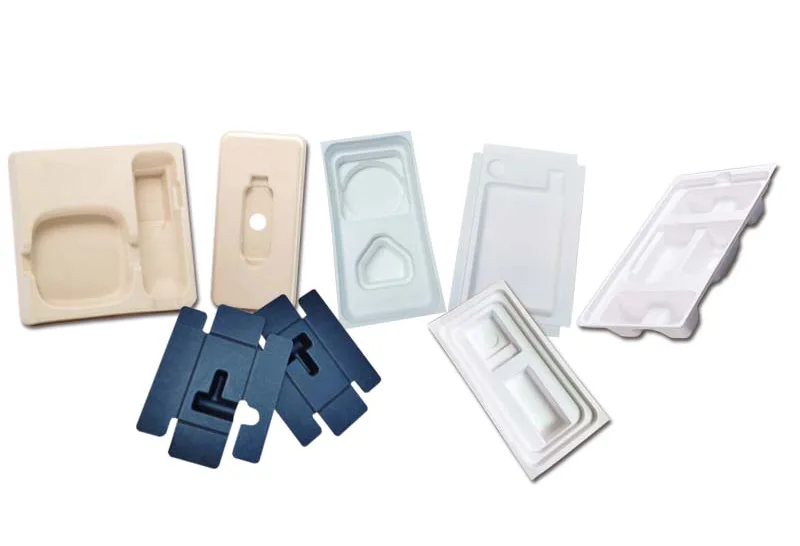
Tray, Insert, Clamshell, Shipper
Most projects are a variation on four formats, and the format usually decides the process: a retail insert that must read as premium points to wet-press, a bottle shipper points to dry-press. The commercial side sits on our cost and tooling page.
- Trays and inserts for retail and transit
- Clamshells and two-piece boxes
- End caps, corner blocks and shippers
The Process Is Chosen Before the Tool Is Cut
The same drawing can be quoted on two processes with different walls, tolerances and minimums. We say which one holds the feature you cannot compromise — before tooling, not after the first sample. Full figures: wet-press vs dry-press.
- Wet-press 0.8–1.5 mm, cavity ±0.02–0.05 mm
- Dry-press 1–3 mm, cavity ±0.08–0.15 mm
- MOQ 1,000 pcs wet-press / 5,000 pcs dry-press

03 — Customization
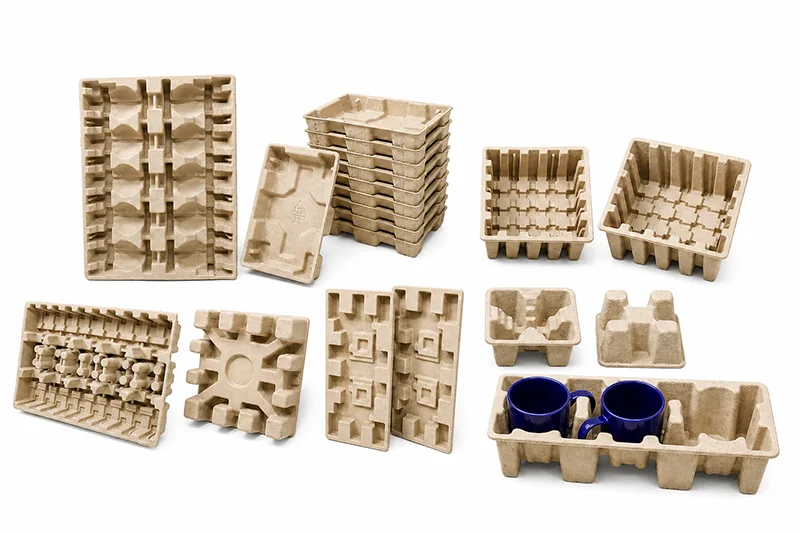
Designed Around Your Product
Concept, 3D modelling, mold development and mass production run in-house. The design review happens before the tool is cut, which is where draft, rib and radius problems are cheap to fix — and after tooling they are not.
- Custom shapes for any product category
- In-house design, mold and production
- Design review before tooling, not after
Ready to Make the Switch?
Send a product drawing and a target market. You will get the process recommendation, the tooling figure and the design conflicts we can already see — not a catalogue. Still building the case internally? Start with why brands switch to molded pulp.

