
Product Overview
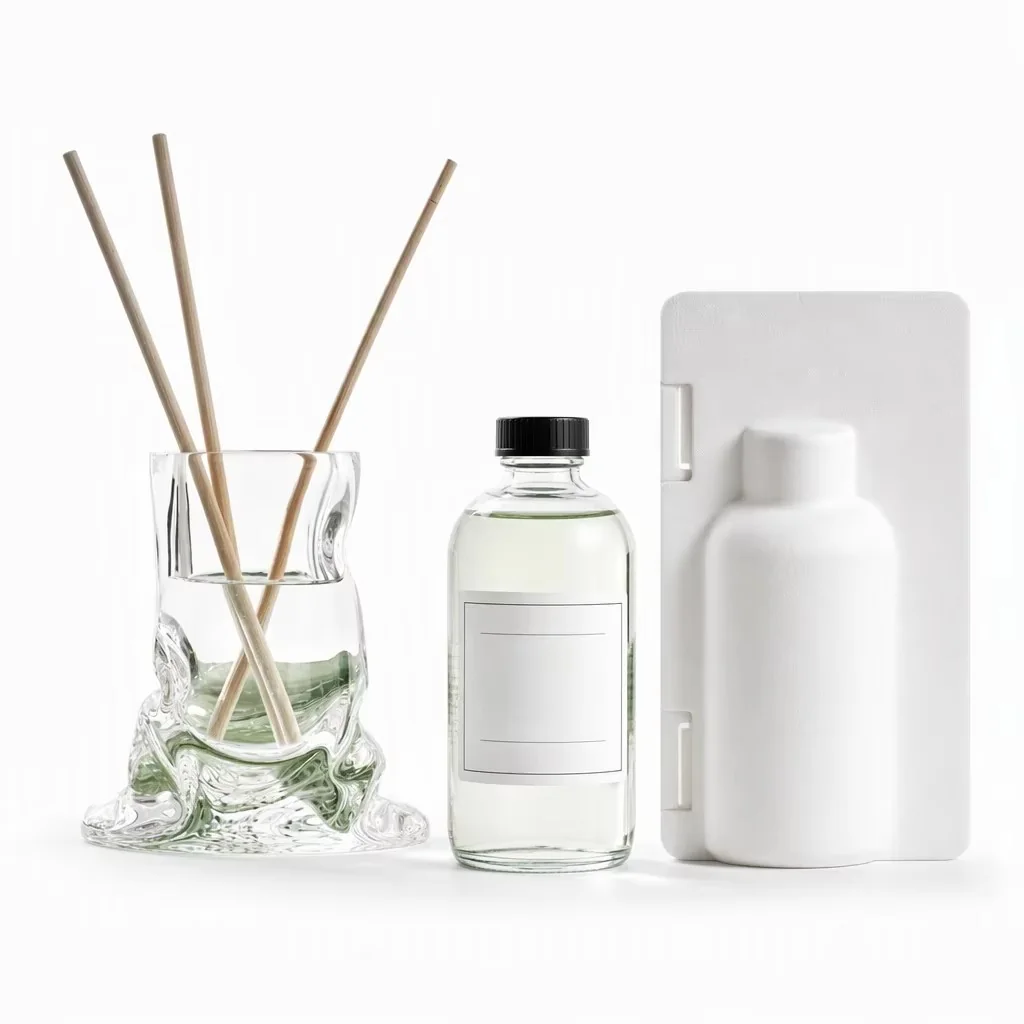
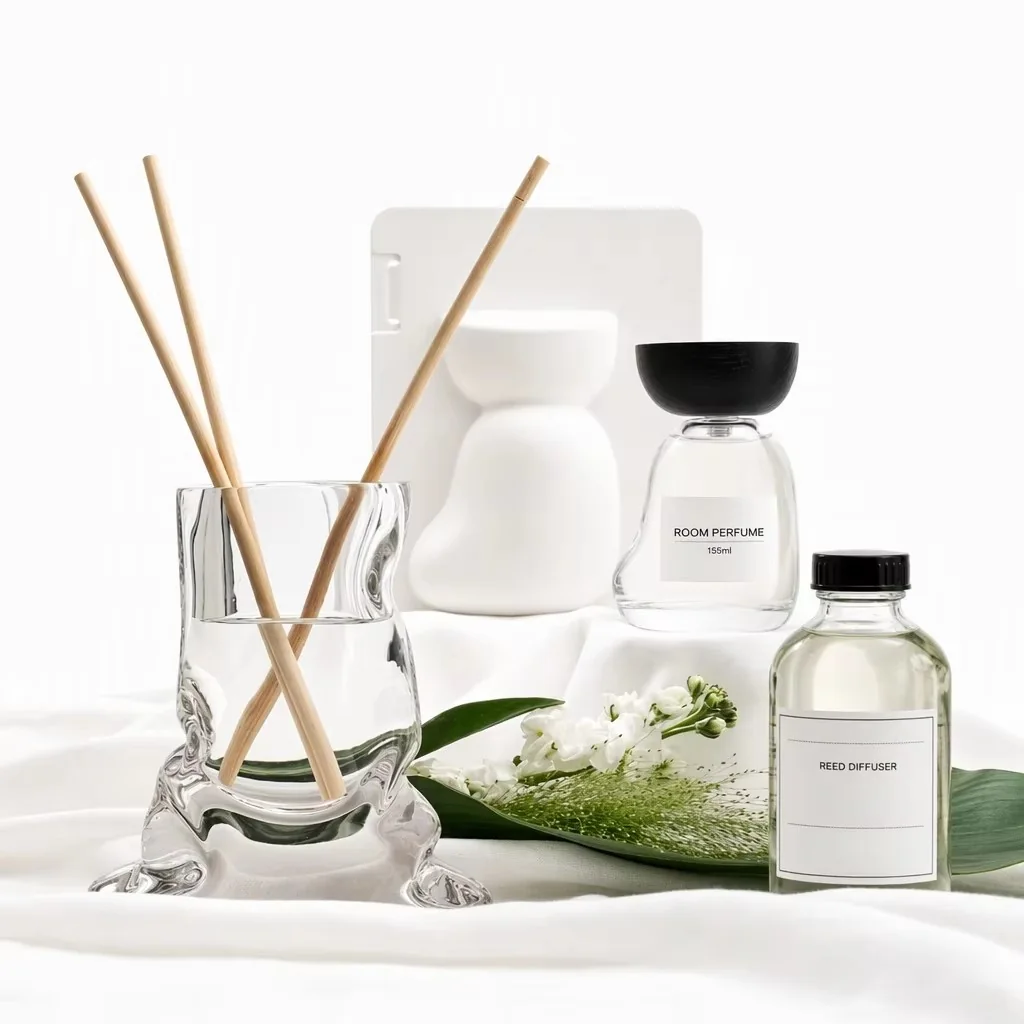
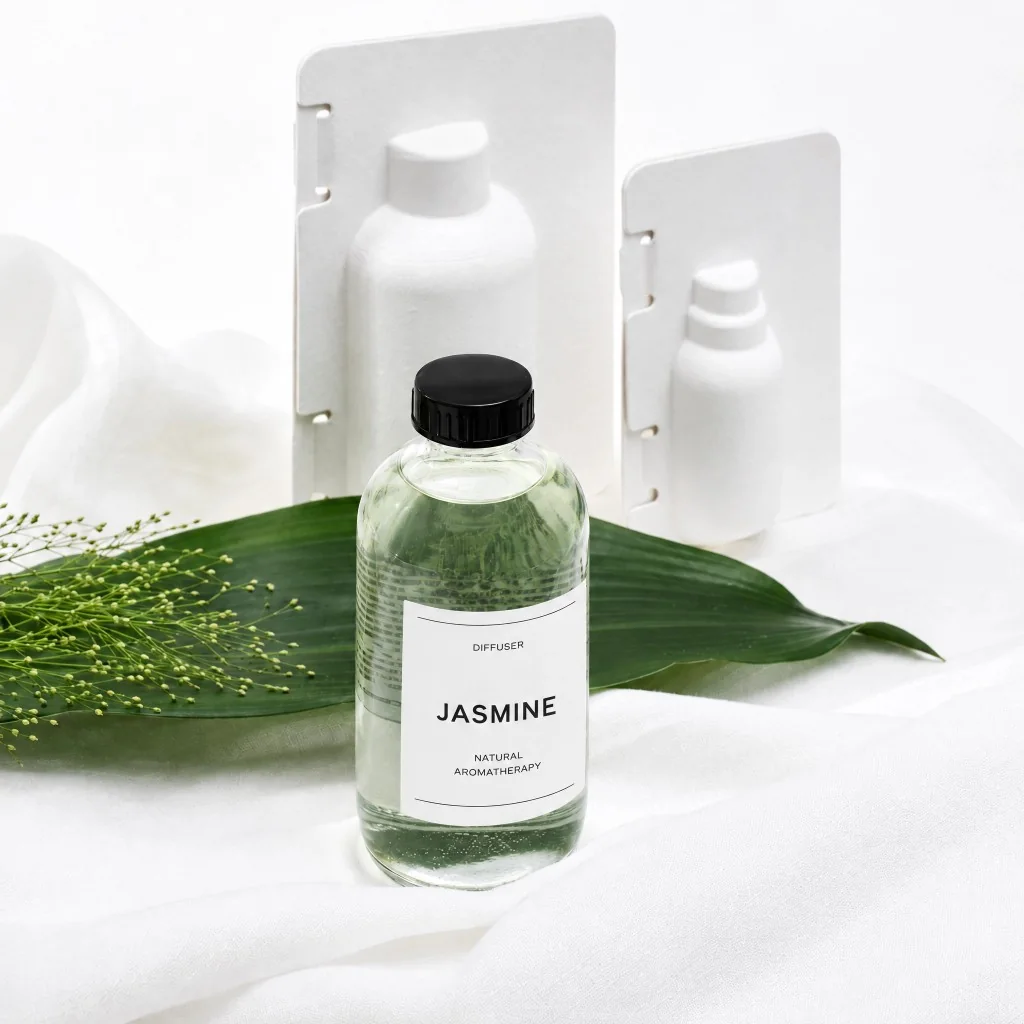
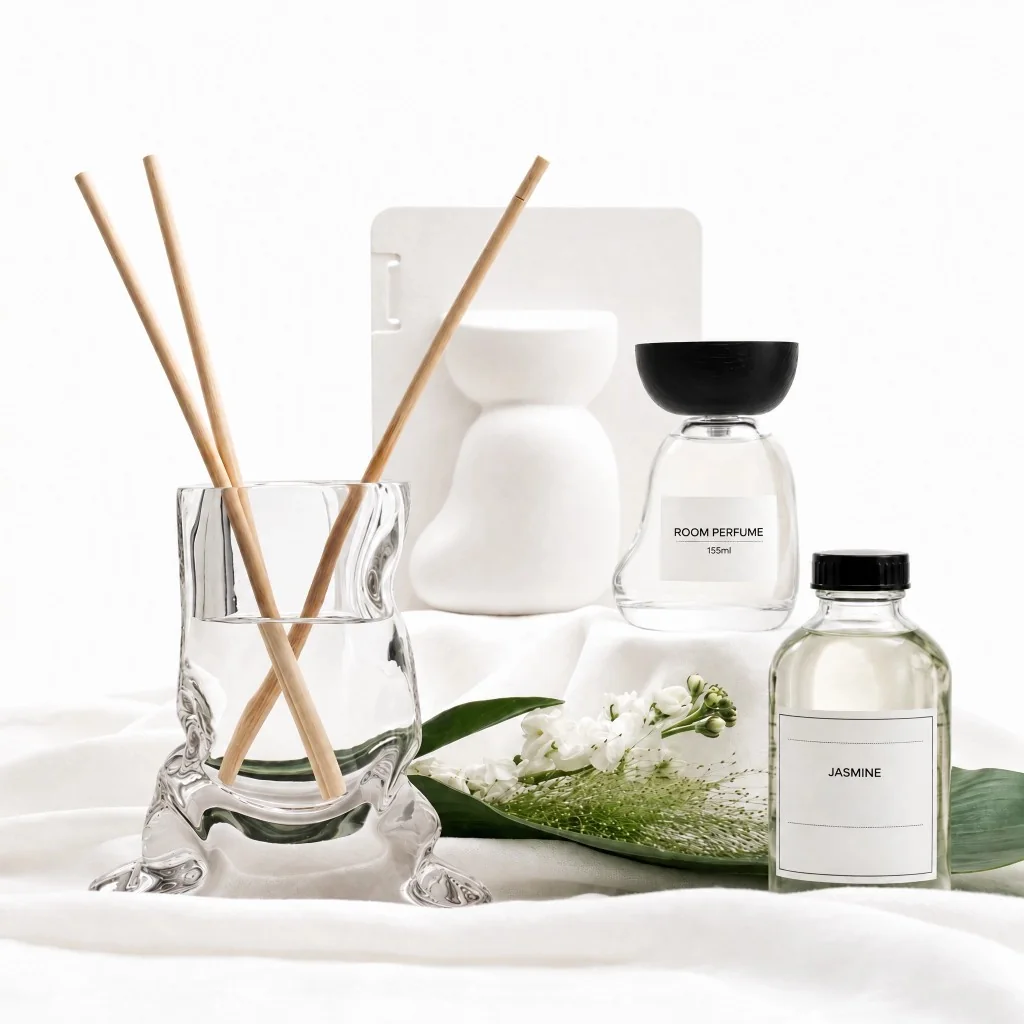
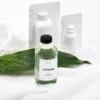
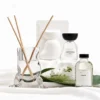
This molded pulp diffuser pack is a white dry-press shell with a formed pocket that follows a reed diffuser or essential oil bottle. The bottle sits into the pocket on its base, the shell holds it upright, and the rim keeps the glass off the carton wall — which is the whole job a foam pad or a plastic blister used to do. The sample set includes two sizes, one for a larger bottle and one for a smaller, each with its own pocket drawn from its own bottle.
The rim carries die-cut slots. Depending on how the pack closes they take a paper band or interlock with the facing half, so the shell can be used on its own inside a printed carton or paired with a second shell as a two-piece pack. Everything is one material: shell, pocket and slots are the same white fibre, and the carton and band are the only other components. Dimensions follow your bottle drawing — the diffusers in the photographs are the bottles the sample tools were built around.
Key Product Features
- Formed bottle pocket — the pocket follows the bottle profile rather than a generic cylinder, so the glass is located at the base and shoulder instead of rattling in a round hole.
- Dry-press 1–3 mm wall — enough substance to hold a pocket shape and take parcel compression, with a matte white face that reads as paper on shelf.
- Die-cut rim slots — cut for a band or an interlock, so one shell serves both a carton insert and a two-piece pack without a second tool.
- Two sizes in the sample set — a large and a small shell for two bottle formats, built as two tools rather than one compromise.
- One material inside — no plastic blister, no flocking, no foam pad and no laminated liner, so the shell goes into the paper stream on its own.
- Stacks flat for freight — shells nest and ship flat-packed, which keeps carton size and freight cost down.
Home Fragrance Packing Scenarios
| Product packed | Why this format fits |
|---|---|
| Reed diffuser bottle, 100–200 ml | The pocket holds the bottle upright so the liquid stays off the neck during transit, and the sticks ship alongside in the carton. |
| Room perfume and essential oil bottles | Pocket diameter and shoulder are drawn per bottle, so a range of formats can share one shell outline at different pocket sizes. |
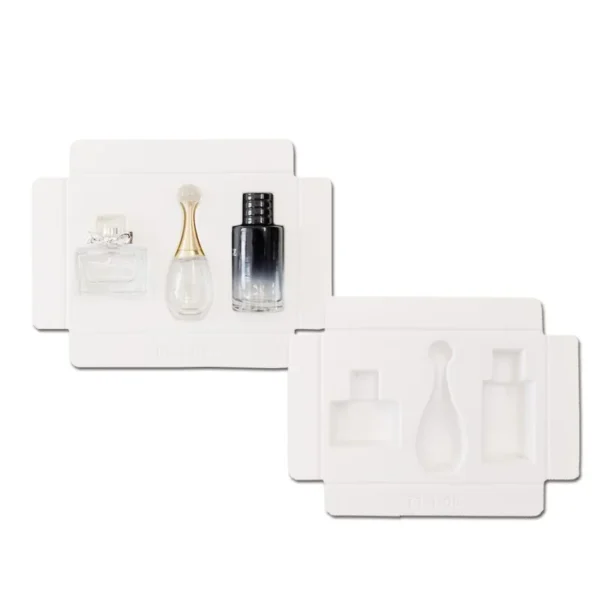
| Two-piece pack for premium fragrance | Two shells interlock through the rim slots to form a closed pack, which avoids a rigid box and a foam insert together. |
| E-commerce and subscription refills | The shell takes parcel handling without a blister, and the band keeps the pack closed without tape or shrink film. |
Material & Eco Advantages
Dry-press white fibre gives a matte surface and a wall thick enough to hold a bottle pocket — 1–3 mm, against 0.8–1.5 mm for a wet-press card. The pack is one material: no plastic blister, no foam pad and no flocked shell, so the pulp goes into the paper stream and only the band and carton need separating. For home fragrance that matters, because the usual build pairs a rigid box with a thermoformed tray, and that tray is the piece a recycler cannot place.
Food-contact and restricted-substance declarations are available on request: an FDA declaration under 21 CFR 176.170 and 176.180 for the paper components, and a restricted-substance declaration in a RoHS format. These are declarations of compliance for a defined grade rather than certificates held by the converter. PPWR (EU 2025/40) is a regulation that applies to the packaging you place on the market — recyclability, recycled content over time, labelling — not a certification a supplier can hold.
Product Specifications
| Material | Molded plant fibre, white finish (grade confirmed per project) |
| Structure | Single formed shell with one bottle pocket and die-cut rim slots; usable as a carton insert or paired with a facing shell |
| Cavity | One pocket drawn to your bottle diameter, height and shoulder; the sample set carries a large and a small shell, each its own tool |
| Process | Dry-press, 1–3 mm wall, matte white surface |
| Cavity tolerance | ±0.08–0.15 mm; a wet-press version reaches ±0.03–0.05 mm if a tighter pocket is needed |
| Dimensions | Custom — set at the tooling stage from your bottle and carton drawings |
| Branding | Deboss on the shell; print normally carried on the band or carton |
| MOQ | 5,000 pcs dry-press; a wet-press version runs from 10,000 pcs. Custom-formed, so no stock-mould route at 1,000 pcs |
| Tooling | From US$2,400, quoted per drawing; paid on the first order, no charge on repeat orders. See the cost and tooling breakdown. |
| Sampling | 10–15 working days |
| Production lead time | 15–20 working days after sample approval |
| Terms | EXW, FOB, CIF or DDU |
Suitable Purchaser Groups
- Home fragrance brands — a diffuser needs the bottle held upright and the sticks kept in the same carton; one shell does both.
- Essential oil and aromatherapy sellers — pocket sizes follow a bottle range, so a family of SKUs can share one shell outline.
- Brands replacing a rigid box plus tray — a pair of interlocking shells removes a component and an assembly step.
- Brands already running molded pulp packaging — the windowed perfume pack covers the scent-gift side of the same range. Where the set closes with a lid instead of interlocking, a five-vial box with a printed belly band carries the same pocket logic into a closed box.
Frequently Asked Questions
Does one shell fit different bottle sizes?
No. The pocket is drawn from the bottle — diameter, height and shoulder — so a different bottle is a different tool. The two shells in the photographs are two sizes built for two bottles, not one shell adjusted.
What are the die-cut slots on the rim for?
They are cut for the closure: a paper band passes through them, or they take an interlock with the facing half, depending on how the carton closes. Which of the two is used is settled on the drawing, because it changes the slot width.
Is it strong enough for a glass bottle in a parcel?
Dry-press runs 1–3 mm, and the pocket holds the bottle on its base and shoulder so it cannot rock against the carton wall. That is a claim to test rather than assume: samples are drop-tested under ISTA 3A before a tool is committed.
What is the minimum order quantity?
5,000 pcs for this dry-press shell. If a thinner, smoother face suits the brief, a wet-press version runs from 10,000 pcs. Both are custom-formed, so there is no stock-mould route.
Can the shell be printed?
The shell carries a deboss well, and brand print usually sits on the band or the carton rather than on the pulp itself. Printing directly on the fibre is possible but changes the finish, so it is agreed against artwork on the drawing.
CTA Closing Copy
Send the bottle drawing — diameter, height and shoulder — the number of bottles per carton, and the way the pack closes (band or interlocked halves). We will confirm the pocket profile, the slot width that matches your closure and the wall thickness that survives your parcel route, before a tool is cut. Sampling takes 10–15 working days; production runs 15–20 working days after approval.
If the material is new to your team, start with what molded pulp packaging is. For the decision this shell usually sits inside — whether the pack should be fibre or thermoformed at all — the cosmetic packaging selection guide covers cavity tolerance, MOQ and the documents a retailer asks for.